
For the first time in more than half a century, human beings have once again traveled around the Moon, marking one of the most historic moments in modern space exploration. NASA’s Artemis II mission, which launched on April 1, 2026, carried four astronauts on a nine-day journey beyond low Earth orbit, around the far side of the Moon, and safely back to Earth. The successful mission represents humanity’s first crewed lunar flyby since Apollo 17 in 1972. [1]
The crew—Reid Wiseman, Victor Glover, Christina Koch, and Jeremy Hansen—rode aboard the Orion spacecraft, propelled by NASA’s Space Launch System rocket. During the mission, they traveled farther from Earth than any humans in history, reaching more than 252,000 miles from home as they swung around the Moon’s far side. From that distant vantage point, the astronauts witnessed breathtaking views of the lunar surface, the darkness of deep space, and the fragile blue Earth hanging alone in the void.
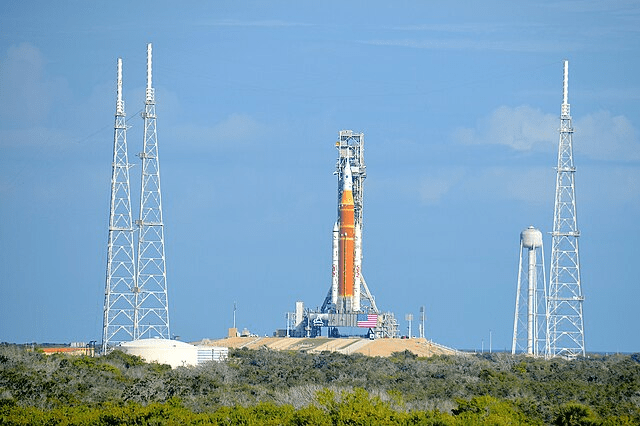
Unlike the Apollo landings, Artemis II was not designed to touch down on the Moon. Instead, it served as a critical test of the Orion spacecraft’s life-support systems, navigation, communications, and reentry performance with humans aboard. Every stage of the mission was designed to prepare NASA for future lunar landings, including the upcoming Artemis III mission, which aims to return astronauts to the lunar surface later this decade.
Beyond the technical achievements, the mission carried enormous symbolic importance. Artemis II signals that humanity is once again capable of deep-space travel, reviving ambitions that extend far beyond the Moon. The journey is part of NASA’s broader goal to establish a long-term lunar presence and use the Moon as a stepping stone for future missions to Mars. [2]
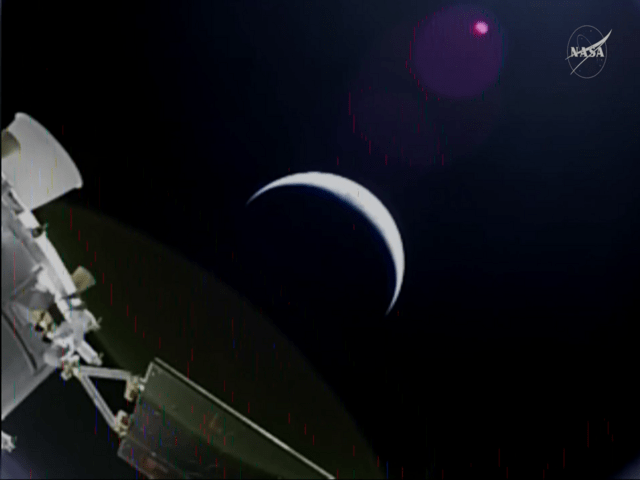
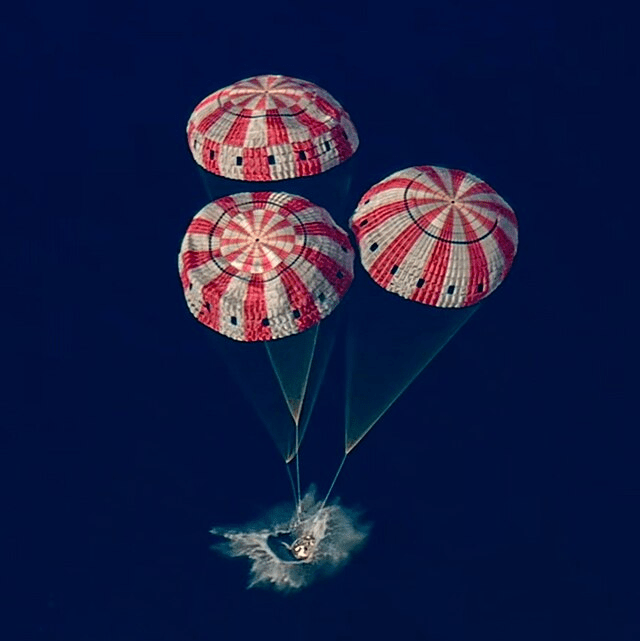
The astronauts returned safely to Earth on April 10, splashing down in the Pacific Ocean after a fiery reentry through Earth’s atmosphere. Their successful return not only closed a remarkable chapter in spaceflight history, but also opened the door to the next generation of human exploration. After 54 years, humanity has once again gone around the Moon—and this time, the goal is not just to visit, but to stay. [3]
It was unbelievably cool to watch Artemis II swing around the Moon, because it felt like humanity had finally stepped back into deep space after more than fifty years. Seeing four astronauts travel farther from Earth than any humans ever have, disappearing behind the Moon’s far side before reemerging on the other side, captured the same awe and wonder people must have felt during Apollo. The mission wasn’t just a technical success—it was a powerful reminder that exploration is still part of who we are, proving that the dream of reaching beyond Earth is alive and stronger than ever. Artemis II made the Moon feel close again, inspiring a new generation to look up and imagine what comes next, from lunar bases to Mars. (4)
 The American Centrist